
advanced cosmetic procedures
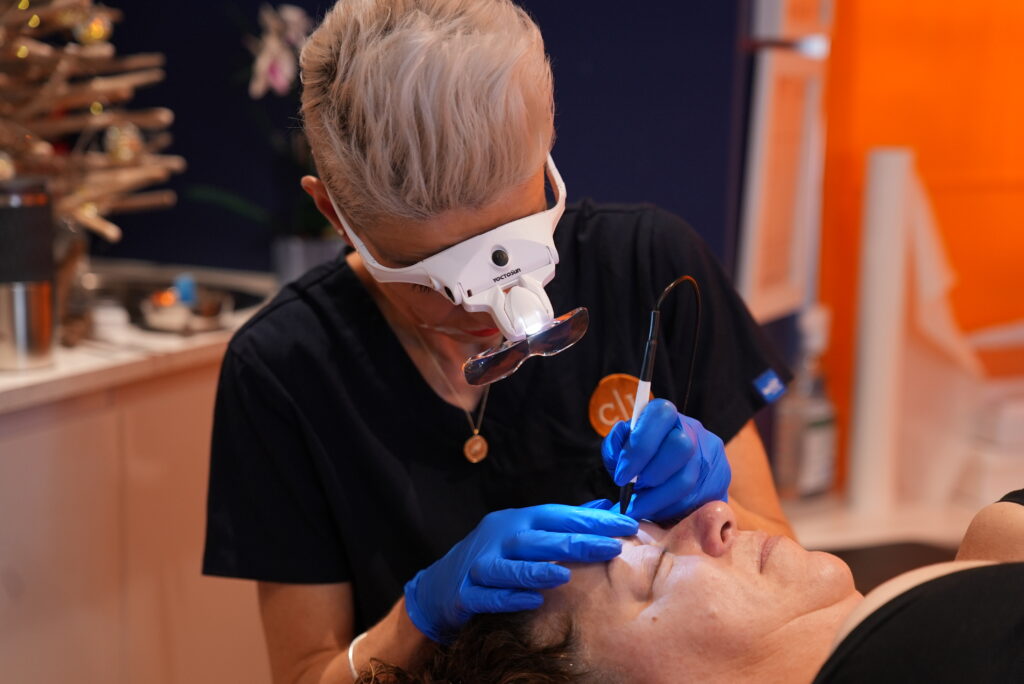
ACP is an advanced cosmetic treatment carried out by qualified electrologists, or practitioners with the relevant medical training.
There are several skin conditions/issues that the NHS and your GP are unable to treat as they are classed at cosmetic.
Many superficial blood conditions and surface lesions such as skin tags, warts, moles, thread veins (telangiectasis), blood spots, mila and much more can be removed using thermolysis/diathermy electrolysis. Blemishes such as these can be disfiguring though can be removed quickly by ACP with little or no residual marking on the skin.
Advanced electrolysis is a cost effective and permanent solution to skin imperfections. It is essential a thorough consultation is booked to gather the correct information and discuss the possibilities of this amazing treatment.
what can we treat?
Also known as telangiectasia, are small, dilated blood vessels near the surface of the skin. They appear as fine, red, or purple lines, resembling threads, hence the name “thread veins.” These veins are commonly found on the face, particularly around the nose, cheeks, and chin, but can also occur on other parts of the body. Factors such as genetics, aging, sun exposure, hormonal changes, and certain medical conditions can contribute to their development. While they are usually harmless, some individuals may find them cosmetically undesirable.
Blood Spots/Cherry Angiomas
Cherry angiomas, also known as Campbell de Morgan spots or senile angiomas, are common skin growths made up of small blood vessels. They typically appear as small, bright red or purple bumps on the skin’s surface. These growths can vary in size, ranging from a pinhead to about a quarter of an inch in diameter. Cherry angiomas are usually harmless. While the exact cause of cherry angiomas is unknown, they tend to become more prevalent with age and may be influenced by genetic factors and sun exposure.
Spider Naevi
Spider nevi, also known as spider angiomas or spider veins, are small, dilated blood vessels that appear close to the skin’s surface. They typically present as a central red dot with smaller blood vessels radiating outward, resembling a spider’s web or a spider’s legs. Spider nevi are commonly found on the face, neck, chest, and arms.
These vascular lesions are often benign and can be caused by various factors, including hormonal changes (such as during pregnancy or puberty), liver disease, sun exposure.
Skin Tags
Skin tags, medically known as acrochordons or fibroepithelial polyps, are small, benign growths that protrude from the skin’s surface. They typically appear as soft, flesh-colored or slightly darker bumps and often have a narrow stalk connecting them to the skin. Skin tags can vary in size from a few millimeters to several centimeters in diameter. These growths are most commonly found in areas where the skin rubs against itself or clothing, such as the neck, armpits, groin, eyelids, and under the breasts. While the exact cause of skin tags is not fully understood, factors such as friction, hormonal changes (such as during pregnancy), obesity, and genetics may contribute to their development. Skin tags are generally harmless and painless, but they can be cosmetically bothersome or cause irritation if they rub against clothing or jewelry. While they can be left untreated, many people choose to have them removed for aesthetic reasons or if they become irritated
These vascular lesions are often benign and can be caused by various factors, including hormonal changes (such as during pregnancy or puberty), liver disease, sun exposure.
Milia
Milia are small, white or yellowish bumps that commonly appear on the skin, particularly on the face, cheeks, nose, and around the eyes. They are tiny cysts filled with keratin, a protein found in skin, hair, and nails. Milia can range in size from a pinhead to a small pea. These bumps typically form when dead skin cells become trapped near the surface of the skin, often within hair follicles or sweat glands. Milia can also develop after skin trauma, such as burns, blisters, or sun damage. Milia are usually harmless and painless, but they can be cosmetically bothersome, especially when they occur on highly visible areas of the face. They are commonly mistaken for whiteheads or acne, but unlike whiteheads, milia do not have an opening on the skin’s surface. Treatment options for milia include gentle exfoliation, topical retinoids, chemical peels, or extraction. It’s important not to attempt to squeeze or pop milia at home, as this can lead to scarring or infection.
MOLE REMOVAL
Moles are simply pigmented growths that usually appear slightly velvety, but, unlike freckles they have a difference in appearance and texture to the surrounding skin. ‘Nanny McPhee’ moles are the typical growth that can be cosmetically disfiguring and can seriously damage an individual’s self esteem and confidence.
Treating a mole involves visibly reducing its appearance rather than outright removal. Various techniques, all utilizing diathermy (AC), are employed for this purpose. During the initial treatment, the mole’s size can be visibly reduced by up to three-quarters, followed by a subsequent session to smooth it, rendering it flat against the skin. While exact color matching with the surrounding skin cannot be guaranteed, particularly if the mole is considerably darker, post-treatment skin is likely to be lighter.
Please note that a doctor’s approval is necessary for mole treatment.
Seborrhoeic Keratosis
Seborrheic keratosis (SK) is a common non-cancerous skin growth characterized by waxy, wart-like or stuck-on appearance. These growths typically range in color from light tan to black, and can vary in size from very small to several centimeters in diameter. Seborrheic keratoses are most commonly found on areas of the body that are exposed to the sun, such as the face, chest, back, and shoulders. The exact cause of seborrheic keratosis is unknown, but they tend to occur more frequently with age and are believed to be influenced by genetic factors and sun exposure. While seborrheic keratoses are generally harmless and do not require treatment, they can be cosmetically bothersome or cause irritation if they rub against clothing or jewellery.
Advanced cosmetic procedures caneffectively remove the growths, but new ones may develop over time, especially in individuals prone to seborrheic keratosis. It’s important to have seborrheic keratoses evaluated by a healthcare professional to ensure they are indeed benign growths and to discuss the most appropriate treatment option based on their size, location, and individual preference.
Age/sun spots (pigmentation)
Age spots, also known as sun spots or liver spots, are flat, brown, grey, or black spots that appear on the skin, typically in areas exposed to the sun, such as the face, hands, shoulders, and arms. These spots are more common in older individuals, hence the name “age spots,” but can also develop in younger people who have had significant sun exposure. Age spots are caused by an overproduction of melanin, the pigment responsible for skin colour, in response to prolonged exposure to ultraviolet (UV) radiation from the sun or tanning beds. UV radiation accelerates the production of melanin in the skin, leading to the formation of age spots over time.
While age spots are usually harmless and do not require treatment, they can be cosmetically bothersome for some individuals. Treatment options for age spots include topical bleaching creams containing ingredients like hydroquinone or retinoids, laser therapy, or intense pulsed light (IPL) therapy, or diathermy. These treatments can help lighten or remove age spots, but new spots may develop with continued sun exposure. Preventing age spots involves protecting the skin from sun damage by wearing sunscreen with a high SPF, seeking shade, wearing protective clothing, and avoiding tanning beds. It’s essential to have any new or changing spots on the skin evaluated by a healthcare professional to rule out skin cancer and determine the most appropriate treatment option.
thread veins
aftercare advice
Aftercare advice will be provided both verbally and in written format and must be followed for proper skin healing.
Immediately after treatment, the skin may appear red, inflamed, and slightly swollen. It will likely feel hot, sore, and may sting a little. This initial reaction usually subsides within a few hours.
To soothe the skin, apply a calming product such as witch hazel, Savlon, or Vaseline regularly using clean fingertips or damp cotton wool. Apply liberally, always layering on top of the previous application to keep the area cool and prevent infection. If the treated area feels particularly hot and uncomfortable, place cold, damp cotton wool pads soaked in the soothing product onto the skin.
Avoid direct heat, including hot baths, showers, saunas, and exposure to ultraviolet light such as the sun or sunbeds. Be cautious with hot air from a hairdryer. Use a minimum of SPF 25 on treated areas exposed to UV light. If the underarm area was treated, avoid using deodorant. Do not apply any other products unless specifically advised. Avoid touching the area unnecessarily and cleanse around it gently, patting dry instead of rubbing.
To prevent further irritation, avoid factors that may have contributed to the skin blemish, such as excessive nose blowing, alcohol, spicy foods, or tight glasses.
A review appointment can be scheduled four weeks after treatment to assess skin healing, ensure satisfaction, and take an after-photo if necessary.